
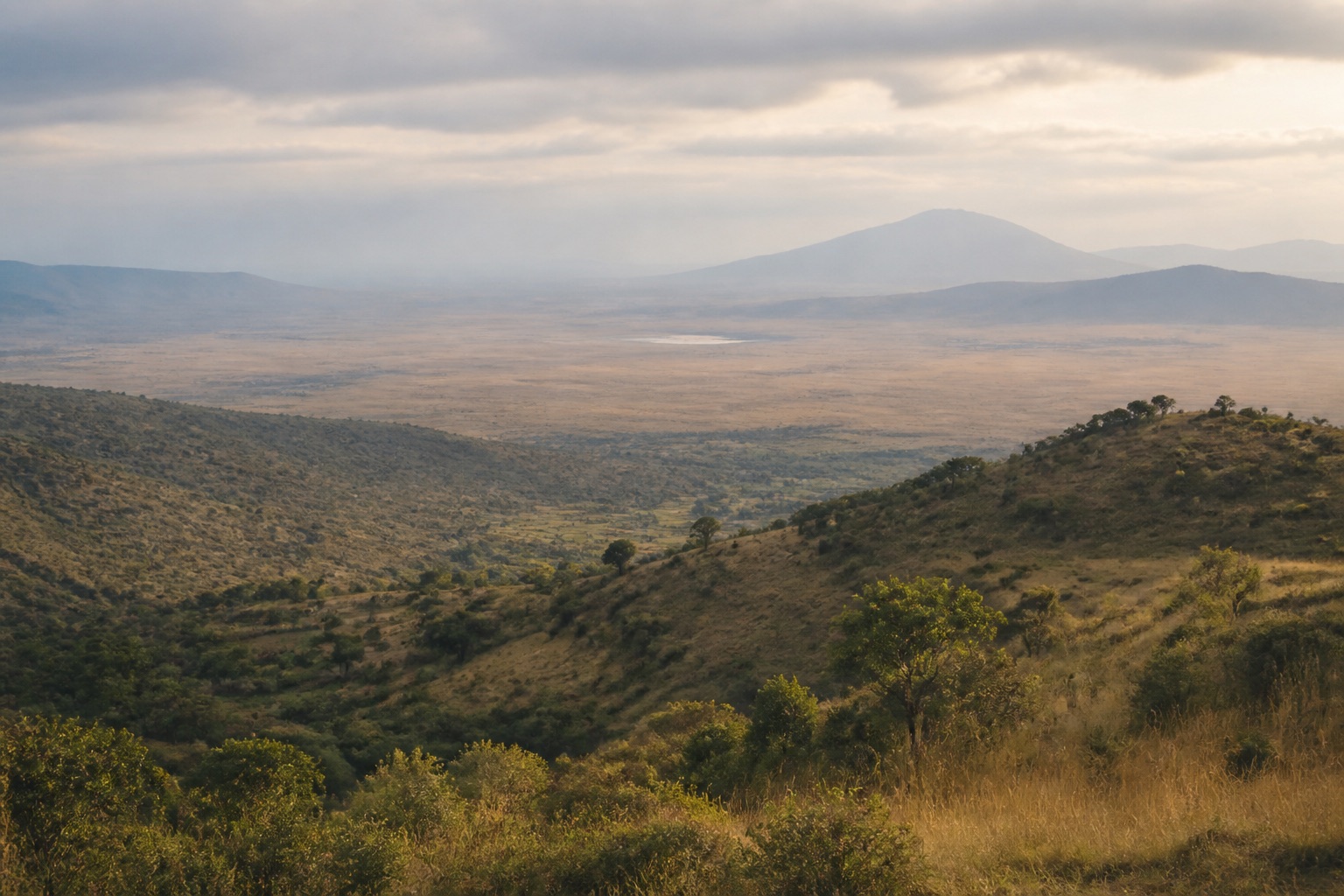
THE OVERVIEW
Build the northern circuit around ecology, human history and carefully paced vehicle travel, resisting rushed checklists and any guarantee about the migration, predators or crater sightings. Arusha: Safari preparation, cultural institutions and recovery. Traffic and a limited pedestrian visitor core. Tarangire and Manyara: Elephant ecology, woodland and Rift Valley landscapes. Seasonal wildlife and rough roads. Ngorongoro highlands: Crater ecology, archaeology and Maasai communities. Altitude, cold mornings and steep roads. Serengeti: Large-scale ecosystem and seasonal movement. Long drives, small aircraft and remote medical access.
YEAR AT A GLANCE
The weather rhythm in Northern Tanzania.
Climate averages, not a forecast. Current conditions still need checking before travel.
- Jan31° / 17.7°75.1 mm rain
- Feb31.9° / 17.9°63.1 mm rain
- Mar30.7° / 18.1°95.3 mm rain
- Apr28.1° / 17.6°159.9 mm rain
- May26.1° / 16°96.6 mm rain
- Jun25.7° / 14.1°19 mm rain
- Jul26.1° / 13.4°9.8 mm rain
- Aug27.5° / 14.1°12.9 mm rain
- Sep29.6° / 15°15.4 mm rain
- Oct30.5° / 16.2°51.8 mm rain
- Nov29.7° / 17.4°118.6 mm rain
- Dec29.8° / 17.8°93.9 mm rain
Average daily high, low and rainfall: NASA POWER Daily API, Northern Tanzania destination coordinates (-3.3869, 36.683), 1991 to 2020
area
Arusha
Safari preparation, cultural institutions and recovery
Safari preparation, cultural institutions and recovery
Details should be checked for your travel dates.area
Tarangire and Manyara
Elephant ecology, woodland and Rift Valley landscapes
Elephant ecology, woodland and Rift Valley landscapes
Details should be checked for your travel dates.area
Ngorongoro highlands
Crater ecology, archaeology and Maasai communities
Crater ecology, archaeology and Maasai communities
Details should be checked for your travel dates.area
Serengeti
Large-scale ecosystem and seasonal movement
Large-scale ecosystem and seasonal movement
Details should be checked for your travel dates.experience
Cultural Heritage Centre or Arusha museum context
Planning note
Use an opening cultural visit to establish regional art and history before wildlife touring.
Details should be checked for your travel dates.experience
Tarangire National Park
Planning note
A guide can interpret baobab woodland, river dependence and elephant society across seasons.
Details should be checked for your travel dates.experience
Olduvai Gorge Museum
Planning note
The museum connects human evolution, archaeology and contested research histories within the conservation area.
Details should be checked for your travel dates.experience
Ngorongoro Crater
Planning note
Treat the caldera as a complex ecosystem and inhabited conservation landscape, not a guaranteed Big Five arena.
Details should be checked for your travel dates.experience
Serengeti ecosystem safari
Planning note
Plan by ecology and season rather than promising a river crossing or migration position.
Details should be checked for your travel dates.station
Arusha Airport
airport
Domestic bush flights use this smaller airport; baggage and boarding limits must be confirmed.
Details should be checked for your travel dates.travel_advice
Northern Tanzania climate normals
Verified 1991 to 2020 monthly averages
NASA POWER's complete 1991 to 2020 daily series at Northern Tanzania's canonical coordinate shows average daily highs from 25.7°C to 31.9°C, lows from 13.4°C to 18.1°C and average monthly rainfall from 9.8 mm to 159.9 mm. These are historical gridded estimates, not a forecast.
Details should be checked for your travel dates.travel_advice
Choosing the time to go
Seasonal planning
June to October is generally dry and popular. The northern circuit remains viable year-round, with calving often around late January to February and long rains commonly in April and May. Natural events are never guaranteed.
Details should be checked for your travel dates.travel_advice
Plan the complete route
Access and practical detail
Obtain exact aircraft, vehicle, room, bathroom and activity transfer details before confirming. Remote medical evacuation cover and operator emergency procedures are essential. Wildlife, migration, weather and road conditions are live variables and must never be guaranteed.
Details should be checked for your travel dates.travel_advice
Current travel guidance
Keep official advice date-specific
Recheck entry, health, security, regional warnings and transport disruption before travel.
Details should be checked for your travel dates.STAY
Hotels to consider
A considered starting point, not a statement of availability or a booking recommendation.
Legendary Lodge
Garden lodge
Northern Tanzania
For arrival recovery, space and a calm start before safari.
Grounds are spread out and it is outside central Arusha.Chem Chem Lodge
Low-density safari lodge
Northern Tanzania
For a slower, conservation-focused base between Tarangire and Manyara.
Remote road access, raised decks and outdoor distances require checks.ORIENTATION
A sense of place
Every marker uses coordinates supplied by the published Desk guide.
AT A GLANCE
Practical notes
- Typical stay
- Shape the stay around a coherent route and the required transfer time.
- When to consider
- June to October is generally dry and popular. The northern circuit remains viable year-round, with calving often around late January to February and long rains commonly in April and May. Natural events are never guaranteed.
- Climate
- NASA POWER historical data at the destination coordinates provide a complete 1991 to 2020 daily series aggregated into 12 calendar-month normals. Average daily highs range from 25.7°C to 31.9°C, lows from 13.4°C to 18.1°C and average monthly rainfall from 9.8 mm to 159.9 mm. These are historical gridded estimates, not a forecast.
- Getting around
- Kilimanjaro International Airport: The principal northern-circuit gateway is east of Arusha; arrange a known transfer and assistance. Arusha Airport: Domestic bush flights use this smaller airport; baggage and boarding limits must be confirmed.
- Worth preparing for
- Obtain exact aircraft, vehicle, room, bathroom and activity transfer details before confirming. Remote medical evacuation cover and operator emergency procedures are essential. Wildlife, migration, weather and road conditions are live variables and must never be guaranteed. Recheck entry, health, security, regional warnings and transport disruption before travel.
Sources and credits
- Northern Tanzania official tourism · Official destination organisation
- Legendary Lodge official website · Legendary Lodge
- Chem Chem Lodge official website · Chem Chem Lodge
- Tarangire National Park official information · Tarangire National Park
- Olduvai Gorge Museum official information · Olduvai Gorge Museum
- Arusha Airport official information · Arusha Airport
- Tanzania travel advice · UK FCDO
- NASA POWER daily climate series, 1991 to 2020 · NASA POWER · NASA POWER daily gridded estimates at the destination coordinates; complete 1991 to 2020 daily maximum, minimum and corrected precipitation series aggregated into 12 calendar-month normals; raw response checksum cb12f78e7c3719f8f22d23b3a56e60e92b19602c17a9382f2703a9ad0bd6c33b verified 2026-09-22
Guide last reviewed 23 September 2026.