
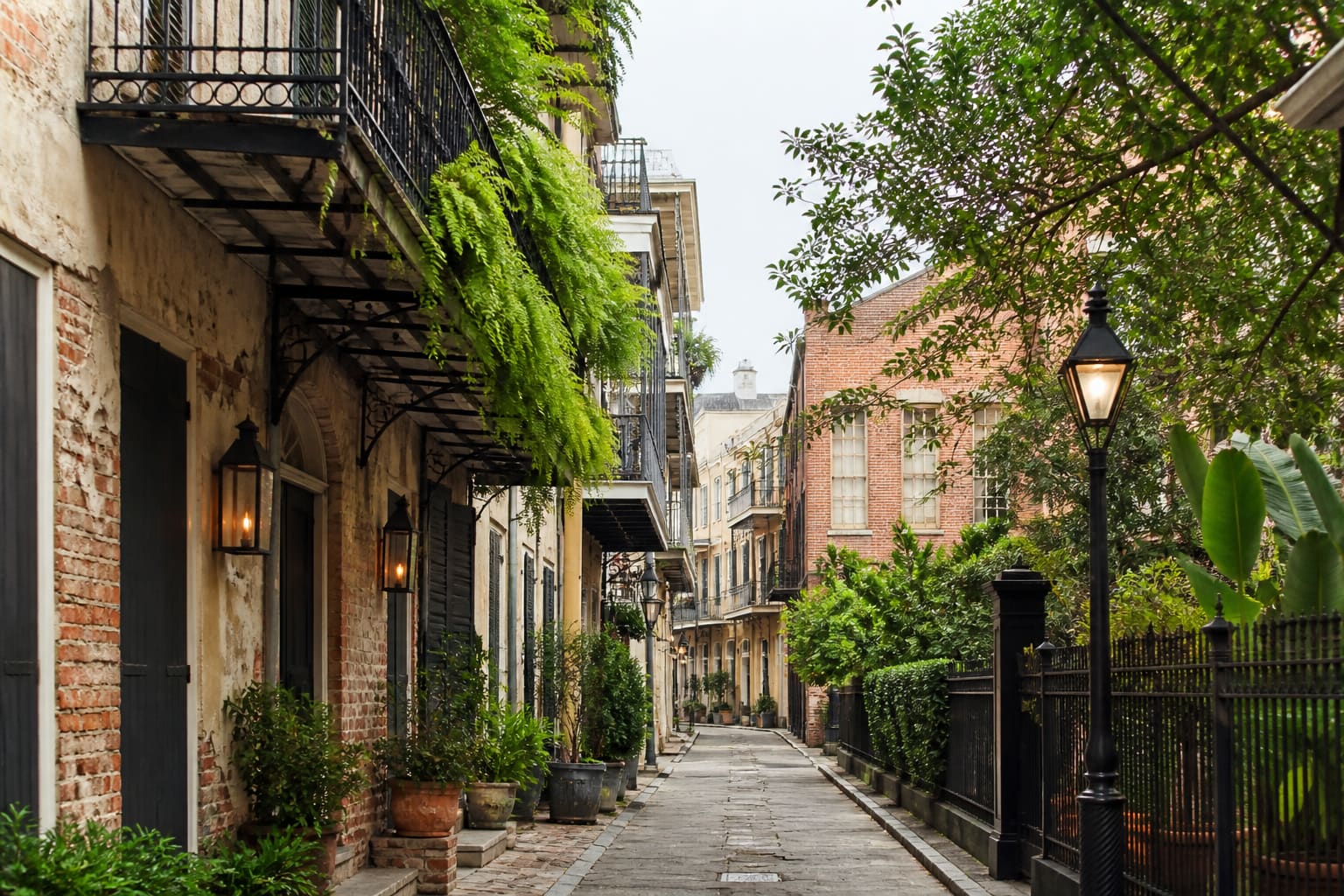
THE OVERVIEW
Osaka is more rewarding when its appetite and humour are placed alongside design, industry and urban history. Rail makes it easy to range widely, but station scale and the contrast between Umeda, Namba and the bay area deserve deliberate planning. Namba and Shinsaibashi: Food, nightlife and first-time energy. Crowds, noise and complex underground routes. Umeda: Regional rail links and contemporary city stays. The station complex is enormous. Nakanoshima and Kitahama: Museums, architecture and riverside walks. Quieter at night and spread along the island. Tennoji and Shinsekai: Markets, museums and older popular culture. Busy streets and uneven atmosphere after dark. Osaka Bay: Large attractions and waterfront hotels. Remote from central neighbourhood life.
YEAR AT A GLANCE
The weather rhythm in Osaka.
Climate averages, not a forecast. Current conditions still need checking before travel.
- Jan6.8° / -0.6°63.9 mm rain
- Feb8° / -0.5°74.2 mm rain
- Mar12° / 1.8°117.4 mm rain
- Apr17.5° / 6.7°135.1 mm rain
- May22.1° / 11.8°168.6 mm rain
- Jun25.4° / 16.7°218.9 mm rain
- Jul28.8° / 21.3°209.9 mm rain
- Aug29.9° / 22°161.4 mm rain
- Sep26.4° / 18.3°225.7 mm rain
- Oct20.9° / 12.1°177.4 mm rain
- Nov15.3° / 6.3°92.1 mm rain
- Dec9.5° / 1.4°69.1 mm rain
Average daily high, low and rainfall: NASA POWER Daily API, Osaka destination coordinates (34.6937, 135.5023), 1991 to 2020
area
Namba and Shinsaibashi
Food, nightlife and first-time energy
Food, nightlife and first-time energy
Details should be checked for your travel dates.area
Umeda
Regional rail links and contemporary city stays
Regional rail links and contemporary city stays
Details should be checked for your travel dates.area
Nakanoshima and Kitahama
Museums, architecture and riverside walks
Museums, architecture and riverside walks
Details should be checked for your travel dates.area
Tennoji and Shinsekai
Markets, museums and older popular culture
Markets, museums and older popular culture
Details should be checked for your travel dates.area
Osaka Bay
Large attractions and waterfront hotels
Large attractions and waterfront hotels
Details should be checked for your travel dates.experience
Osaka Castle Museum
Planning note
Exhibitions explain the castle’s repeated reconstruction and Toyotomi-era politics.
Details should be checked for your travel dates.experience
Nakanoshima Museum of Art Osaka
Planning note
Strong modern design and art exhibitions anchor the city’s museum district.
Details should be checked for your travel dates.experience
Osaka Museum of Housing and Living
Planning note
A reconstructed Edo-period streetscape makes ordinary urban life tangible.
Details should be checked for your travel dates.experience
National Bunraku Theatre
Planning note
A performance or guided introduction reveals Osaka’s foundational puppetry tradition.
Details should be checked for your travel dates.experience
Kuromon Ichiba Market
Planning note
An early, respectful visit can focus on produce and working food culture rather than grazing alone.
Details should be checked for your travel dates.station
Kansai International Airport
airport
Main international gateway with direct rail and road services to central Osaka.
Details should be checked for your travel dates.station
Osaka Itami Airport
airport
Closer domestic gateway with monorail, bus and road transfers.
Details should be checked for your travel dates.station
Shin-Osaka Station
rail
Shinkansen gateway north of the centre. Allow time for transfers to local lines.
Details should be checked for your travel dates.travel_advice
Osaka climate normals
Verified 1991 to 2020 monthly averages
NASA POWER Daily API data at the destination coordinates show average daily highs from 6.8°C to 29.9°C and lows from -0.6°C to 22°C across the year.
Details should be checked for your travel dates.travel_advice
Choosing the time to go
Seasonal planning
Spring and autumn are comfortable but busy. Summer is hot, humid and vulnerable to typhoons; winter is cooler and generally drier. Major events and holidays affect demand and opening patterns.
Details should be checked for your travel dates.travel_advice
Plan the complete route
Access and practical detail
Plan by effort, surface, gradient and transfer complexity rather than map distance alone. Obtain written confirmation for the exact hotel room, entrance, lift, bathroom and vehicle drop-off. Book transport assistance in advance and identify the precise terminal, station, pier or meeting point. Confirm attraction access directly because operations and maintenance can change routes. Carry suitable insurance and retain flexibility for weather or disruption.
Details should be checked for your travel dates.travel_advice
Current travel guidance
Keep official advice date-specific
Recheck earthquakes, typhoons, extreme heat, local laws, entry rules, healthcare and insurance.
Details should be checked for your travel dates.STAY
Hotels to consider
A considered starting point, not a statement of availability or a booking recommendation.
Zentis Osaka
Contemporary neighbourhood hotel
Osaka, Japan
For a restrained design base between Umeda and the river districts.
The office-area setting is subdued on some evenings.Cross Hotel Osaka
Central modern hotel
Osaka, Japan
For travellers who want Dotonbori immediately accessible.
The surrounding district is exceptionally busy and noisy.Imperial Hotel Osaka
Large riverside hotel
Osaka, Japan
For space, river views and a calmer full-service stay.
It is removed from Namba and requires planned station or shuttle use.ORIENTATION
A sense of place
Every marker uses coordinates supplied by the published Desk guide.
AT A GLANCE
Practical notes
- Typical stay
- Give Namba, Umeda and the museum district separate time, then add the bay only when its attractions are a genuine priority. Major stations can make an apparently simple transfer demanding.
- When to consider
- Spring and autumn are comfortable but busy. Summer is hot, humid and vulnerable to typhoons; winter is cooler and generally drier. Major events and holidays affect demand and opening patterns.
- Climate
- NASA POWER Daily API data at the destination coordinates provide a complete 1991 to 2020 series. Average daily highs range from 6.8°C to 29.9°C and lows from -0.6°C to 22°C. These are climate averages, not a forecast.
- Getting around
- Kansai International Airport: Main international gateway with direct rail and road services to central Osaka. Osaka Itami Airport: Closer domestic gateway with monorail, bus and road transfers. Shin-Osaka Station: Shinkansen gateway north of the centre. Allow time for transfers to local lines.
- Worth preparing for
- Plan by effort, surface, gradient and transfer complexity rather than map distance alone. Obtain written confirmation for the exact hotel room, entrance, lift, bathroom and vehicle drop-off. Book transport assistance in advance and identify the precise terminal, station, pier or meeting point. Confirm attraction access directly because operations and maintenance can change routes. Carry suitable insurance and retain flexibility for weather or disruption. Recheck earthquakes, typhoons, extreme heat, local laws, entry rules, healthcare and insurance.
Sources and credits
- Osaka official destination information · Official destination authority
- Osaka accessibility information · Official destination authority
- Zentis Osaka · Zentis Osaka
- Cross Hotel Osaka · Cross Hotel Osaka
- Imperial Hotel Osaka · Imperial Hotel Osaka
- Osaka Castle Museum · Osaka Castle Museum
- Nakanoshima Museum of Art Osaka · Nakanoshima Museum of Art Osaka
- Osaka Museum of Housing and Living · Osaka Museum of Housing and Living
- National Bunraku Theatre · National Bunraku Theatre
- Kuromon Ichiba Market · Kuromon Ichiba Market
- Kansai International Airport · Kansai International Airport
- Osaka Itami Airport · Osaka Itami Airport
- Shin-Osaka Station · Shin-Osaka Station
- Japan travel advice · UK Foreign, Commonwealth and Development Office
- NASA POWER Daily API 1991 to 2020 climate series · NASA POWER · NASA POWER Daily API at the destination coordinates; complete 1991 to 2020 daily maximum, minimum and precipitation series aggregated by calendar month
Guide last reviewed 27 August 2026.